Venue said no to cold sparks and fog? 17 ways DJs make a first dance look cinematic anyway: pin spots, uplight color shifts, mirror balls, water-texture projection, LED sparkler wands, silhouette entrances, live-musician walk-ins and more — with costs, and none of it needs venue approval.
If your venue bans cold sparks and fog, build the moment from light and staging instead: dim the whole room and hit the couple with a single warm pin spot, shift your uplighting to a color reserved for that one song, and add motion with a mirror ball, star-field, or water-texture projection. Layer in guest-powered glow (LED sparkler wands, candles, phone lights) and a planned ending, and the video looks like a production — with zero venue approvals.
More venues than ever restrict cold spark fountains and fog machines — insurance rules, smoke-alarm sensitivity, cleanup clauses. We hear it weekly from Central Valley couples. The good news: the effects couples actually remember on video come from light, not smoke. Here's the full menu we run instead, roughly in order of impact per dollar.
Start with the principle: contrast, not machines
What makes a first dance read as "magical" on camera is the room changing state the instant your song starts. Guests go dark, you go bright, and everything else disappears. Sparks and fog are just two ways of creating that contrast — every idea below is another, and most of them photograph better because nothing is hazy between the lens and you.
The light-based core
1. The room-drop and pin spot
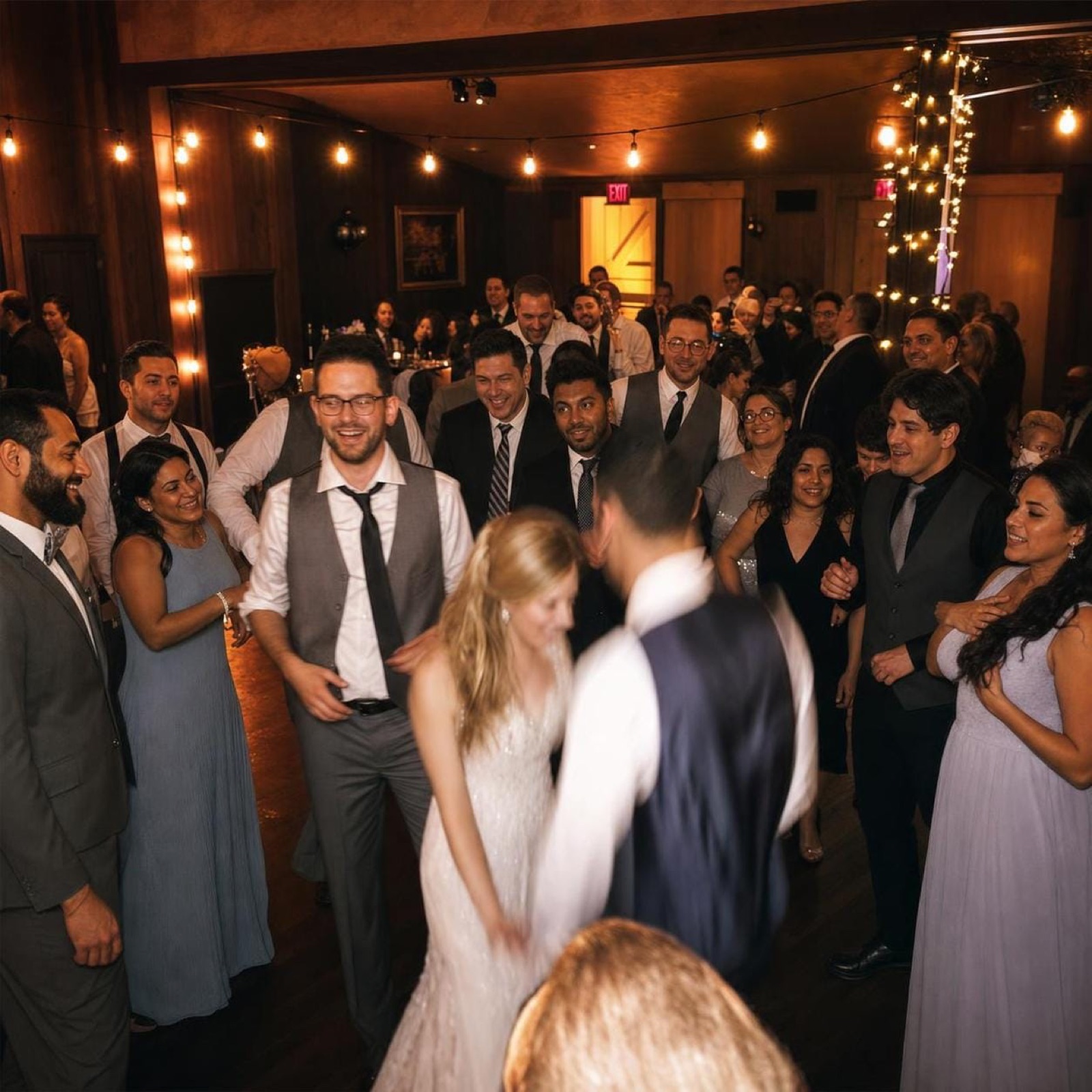
As dinner music fades, the house lights and uplights sink to near-black. One warm spotlight picks you up at the floor's edge and follows you to center. This is the single biggest upgrade per dollar in wedding lighting, and photographers consistently call it their favorite setup to shoot.
Execution details that matter: the spot should sit at roughly a 45-degree angle to the floor (never straight-on from the DJ booth — that's flashlight-in-the-face), and it should be warm white, not cool, so skin tones stay flattering. If your venue has dimmable house lighting, your coordinator or DJ cues it in advance; if not, the DJ's uplights become the house lighting and do the fading. Tell your photographer it's happening — they'll set exposure for the spotlight instead of scrambling when the room goes dark.
2. The uplight color shift
Run the room in warm amber all evening. When your first dance starts, every wall fades to a color that belongs only to that song — blush, lavender, deep blue — then breathes back to amber when it ends. Guests feel the shift even if they can't name it, and your photos from that three minutes look distinct from the rest of the night.
Color guidance from the booth: blush and amber flatter every skin tone; lavender and deep blue read as romantic and photograph cleanly; avoid saturated green and red as the dominant wash (green makes skin look ill on camera, red swallows detail). If your colors are navy and gold, run navy walls with the warm spot on you — the contrast between cool room and warm couple is exactly what cinematographers do on purpose. Our guide to whether uplighting is worth it covers fixture counts and costs for different room sizes.
3. Mirror ball — the effect that never gets banned
A real mirror ball lit by two pin spots throws thousands of slow-drifting specks across the floor, walls, and ceiling. It reads as motion on video the way fog reads as atmosphere — and it keeps working all night instead of burning out in ninety seconds like a spark fountain.
Details: a 16–20 inch ball is right for most reception rooms; hang it over the dance floor center if the venue allows rigging, or use a stand-mounted ball at the floor's edge if not. The two pin spots should hit it from opposite sides so the specks cover the whole room instead of one wall. Spin it slow — a lazy rotation feels romantic, a fast one feels roller rink. For the first dance we often freeze the rest of the rig and let the ball carry the motion alone.
4. Star-field and monogram projection
A gobo projector can wash the ceiling in a slowly rotating star field, or put your initials in light on the dance floor. Nothing to clean, nothing to approve, and it photographs beautifully in a dark room.
Two decisions to make: ceiling vs. floor (ceiling stars feel like dancing outdoors; a floor monogram anchors photos and shows up in every wide shot), and static vs. rotating (static for elegance, slow rotation for motion). Custom monogram gobos need about two weeks' lead time, so this is a book-ahead item, not a week-of add-on. The fixture logic is the same one we cover in lighting the room vs. lighting the dance floor.
5. Water-texture projection — fog's closest legal cousin
Here's the insider substitute almost nobody asks for by name: a moving water or cloud texture projected across the dance floor. The rippling light drifts under your feet through the whole song — it gives video the same "the floor is alive" quality as low fog, with no machine, no residue, and no alarm risk. Paired with a dark room and a pin spot, it's the closest thing to dancing on a cloud that every venue allows.
6. Moving-head color pools and sweeps
One honest note: those dramatic aerial light beams you see in photos need haze in the air to be visible — banning fog usually kills the beam look too. What moving-head fixtures still do beautifully in clear air is paint: slow pools of color gliding across the floor, a soft sweep that crosses the room on the final chorus. Think of them as animation for the floor and walls rather than lasers in the air, and they earn their place without any atmosphere.
Guest-powered effects
7. LED sparkler wands — the direct spark substitute
Battery-powered LED "sparkler" wands flicker convincingly, cost a couple dollars each, and are completely venue-safe. Hand them out as guests ring the dance floor and the wide shot looks remarkably like a sparkler moment — repeatable all night, safe around kids and dresses, and reusable for the send-off photo if your venue also bans real sparklers.
8. The candle or glow circle
Guests circle the floor holding LED candles while the room goes dark — a hundred small warm points of light around you. Your MC cues it in one line ("grab a candle from your table and join us around the floor"), which means it doubles as a gentle way to gather everyone for the dances and open floor that follow. Real flames are usually banned for the same insurance reasons as sparks; LED votives photograph identically.
9. Phone-flashlight sway
Free, and it works. The MC asks guests to raise phone flashlights and sway them; two hundred moving points of light fill the background of every shot. It's most powerful on the final chorus of a big-swell song rather than the whole dance — save it for the moment the song peaks.
10. Bubbles
Most venues that ban fog allow bubble machines, because bubbles don't trigger smoke alarms. Backlit bubbles drifting through a dark room read as genuinely dreamy on camera. Two execution rules: aim the machines across the corners of the floor rather than the center (so residue lands off your dance path — confirm the venue's slick-floor policy), and light them from behind with a colored uplight so they show up on video instead of disappearing.
Staging and choreography tricks
11. The silhouette entrance
Start the song with the room fully dark and a single bright light behind the doorway. You enter as silhouettes, and the spot picks you up when you reach the floor. It costs nothing but a lighting cue and gives the video an actual opening scene.
12. Dance in the round
Instead of dancing in front of a head table, place the floor at the room's center and let guests surround you on all sides. Every seat gets a front-row view, the photos have faces and reactions in every direction, and the moment feels like it belongs to the whole room. Pairs perfectly with the candle circle above.
13. The live-musician walk-in
Start the first dance to the recorded track, then have a violinist or saxophonist walk in and play over the second half while the DJ carries the backing. The surprise lands hard, guests reach for their phones, and it needs no approval from anyone. If you're weighing live elements more broadly, this hybrid approach costs a fraction of a band.
14. The choreographed ending
You don't need a routine — you need an ending. A planned dip, a spin into a hug, a kiss on the final note gives your photographer a known final frame and your guests a cue to erupt. Practice it five times at home to the actual edit of your song. It's the difference between a dance that trails off and one that finishes.
Audio production — the ignored half of magic
15. The personal intro
Before the song starts, thirty seconds of audio that belongs to you: a line from your vows, a clip from a parent's voicemail, the voice memo from the night you got engaged. The room goes silent, the clip plays over the dark room, and the song blooms out of it. This costs nothing and we've watched it out-emotion every effect on this list.
16. The tight edit and the mid-song lift
Full songs run 3.5–4+ minutes, which is long with everyone watching. A 2-minute edit ends on a high note before attention drifts. For couples who want a wow without machines, a mid-song transition — ballad for the first half, then a beat drop into something fun as the wedding party rushes the floor — turns the first dance into the dance-floor opener in one move. Our guides to choosing your first dance song and the first-dance mistake that looks awkward on video cover song choice and length in detail.
17. Golden hour, if the timeline allows
An outdoor first dance at sunset needs no effects at all — the sky is the production budget. In the Central Valley that means timing the dance 20–30 minutes before actual sunset and having your DJ run sound outside for one song. It only works if your timeline and venue layout cooperate, but when it does, it beats every machine ever built.
What the alternatives cost
| Effect | Typical add-on cost | Venue approval needed? |
|---|---|---|
| Room-drop + pin spot | $50–$150 | No |
| Uplight color shift | Included with uplighting ($300–$600) | No |
| Mirror ball + pin spots | $100–$250 | Only if ceiling-hung |
| Star-field / monogram gobo | $150–$400 (custom monogram higher) | No |
| Water-texture projection | $100–$200 | No |
| LED sparkler wands (100 guests) | $200–$350 | No |
| LED candle circle | $75–$150 | No |
| Bubble machines (pair) | $75–$150 | Confirm floor policy |
| Live musician walk-in | $300–$600 | No |
| Phone lights, silhouette entrance, personal intro, edit | $0 | No |
For comparison, a cold spark package typically runs $300–$600 for one ninety-second moment — several of the effects above cost less and last the whole reception.
What we'd run: the no-approval-needed package
For most receptions we combine the room-drop, a warm pin spot, a mirror ball, and an uplight color shift, then layer one personal element — the intro audio or the candle circle — on top. Total setup rides along with the DJ rig, needs zero venue sign-off, and the video looks like you hired a production company. If your venue does allow sparks or low fog and you're weighing them, ask us — we cover the costs and rules for both elsewhere on the site.
Frequently Asked Questions
Why do venues ban cold sparks and fog machines?+
What's the best first dance effect that no venue restricts?+
What looks most like cold sparks without being banned?+
What looks most like fog or dancing on a cloud without a machine?+
Are bubble machines allowed where fog machines aren't?+
Does a mirror ball really work for a modern wedding?+
Planning a first dance your venue can't say no to? Tell us your venue and your song — we'll bring the lighting that makes it work.
More wedding tips & ideas
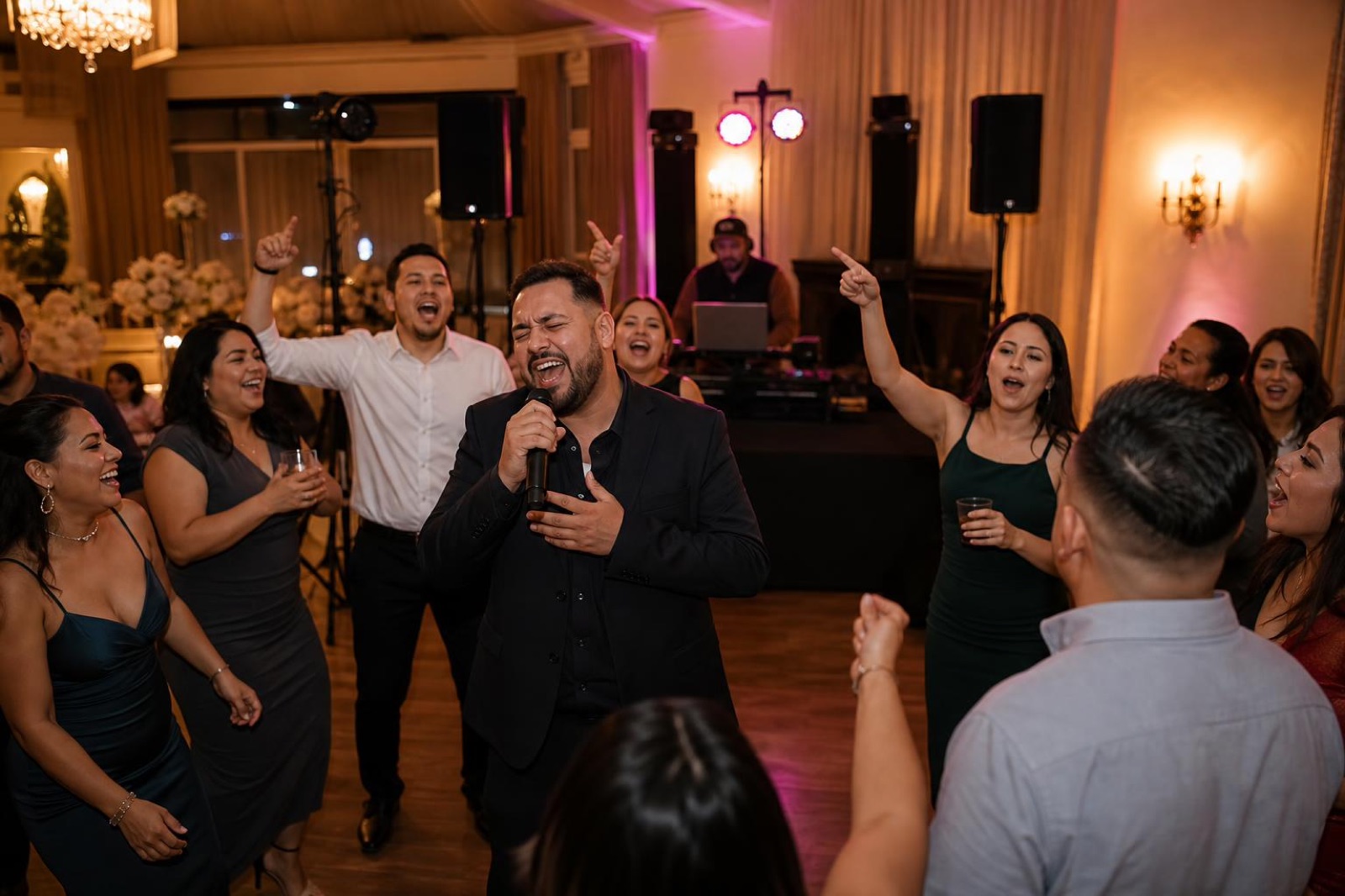
Wedding Uplighting & Dance Floor Lighting: Is It Worth It?
Is wedding uplighting worth it? Here's what uplighting, monogram projection, and dance-floor lighting actually do for your reception — and when they're worth adding.
Read the guide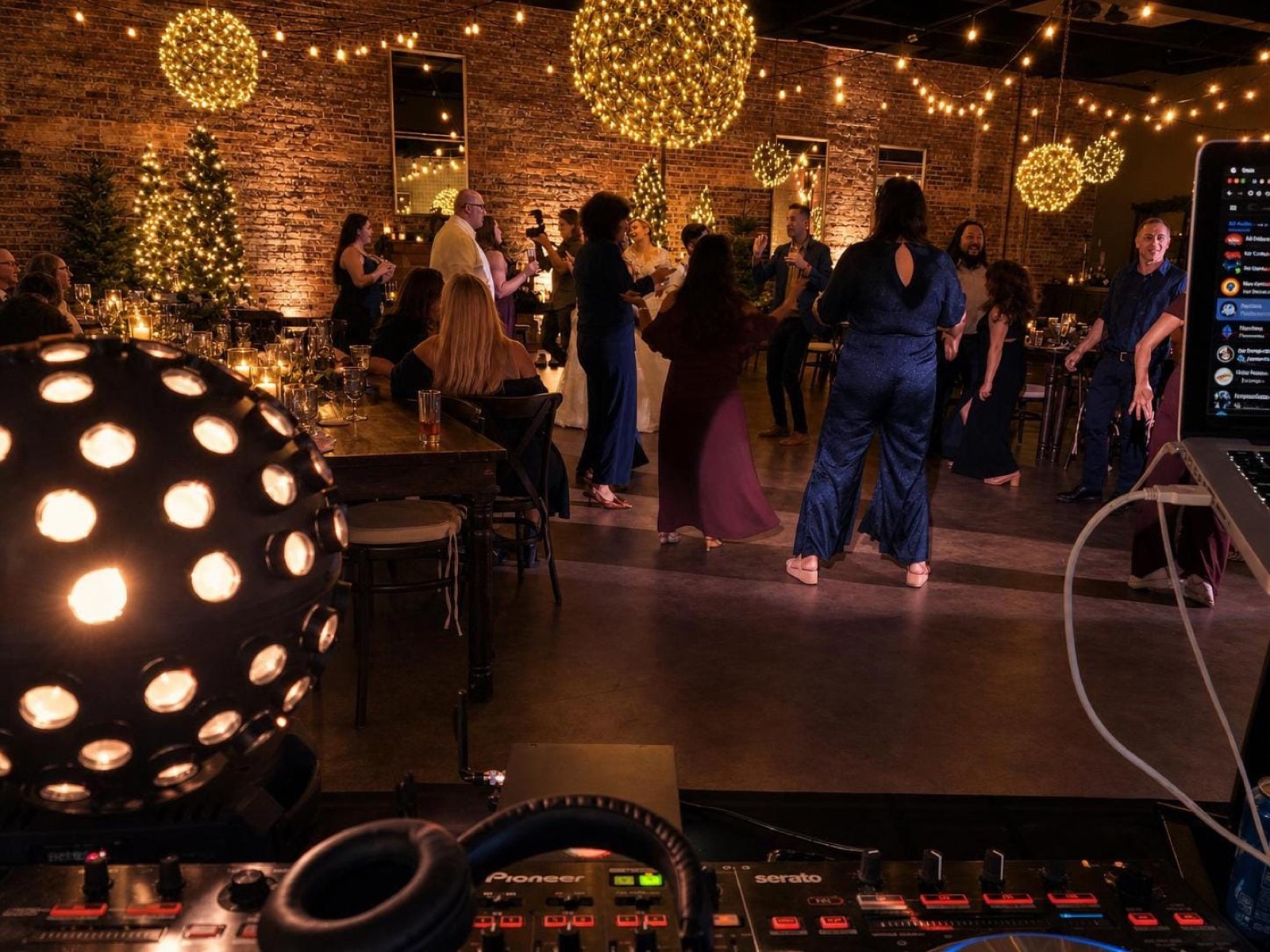
What Equipment Do Wedding DJs Use? The Full Setup, Explained
From the Bose PA and wireless mics to dry-ice cloud machines and the backup rig you never see — everything a professional wedding DJ brings, and the equipment questions worth asking before you book.
Read the guide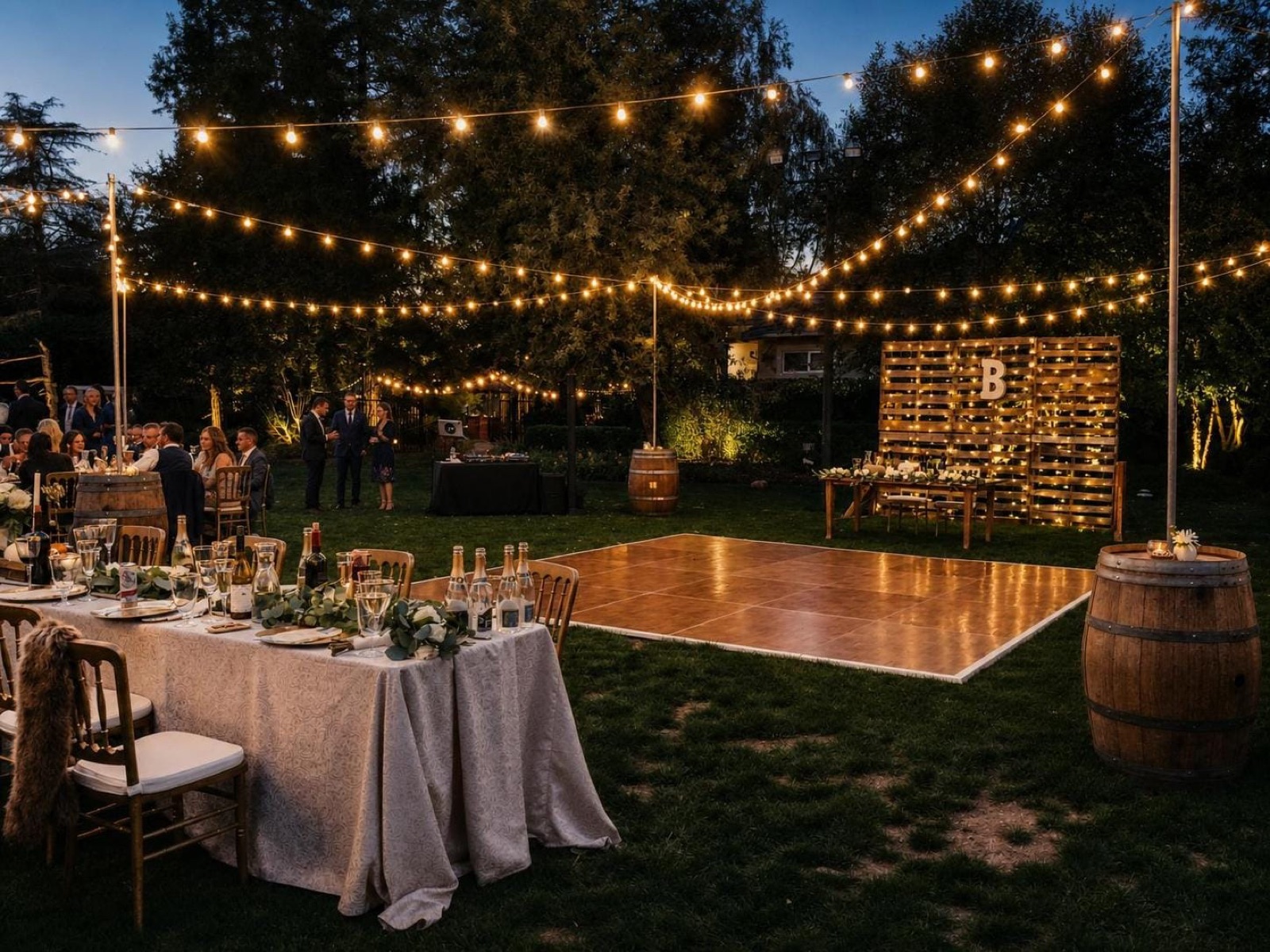
What 'Backup Equipment' Really Means — and Why It Saved a Wedding
"Do you have backup equipment?" is a question couples ask without knowing what a good answer sounds like. From the booth, backup gear is the difference between a hiccup and a disaster.
Read the guidePlanning a wedding in Northern California?
We'd love to help keep your night on time and your dance floor full.
Check Your Date